
Skin care products order fulfillment is the process of storing, picking, packing, and shipping skincare items to customers. It sounds like standard ecommerce fulfillment. It is not.
Skincare products come in glass bottles, pumps, and dropper containers. Many contain active ingredients that degrade in heat. Serums, retinols, and vitamin C formulations lose potency when exposed to temperature swings during transit or warehouse storage. A customer who receives a broken bottle or a degraded product will not reorder. They will request a refund and leave a review.
Getting fulfillment right for skincare means solving three problems at once. You need packaging that protects fragile containers. You need storage that maintains product integrity. And you need shipping speed that limits time in transit.
Why Skin Care Fulfillment Is Harder Than Standard Ecommerce
Most ecommerce products survive a rough trip through the carrier network. A t-shirt, a phone case, or a bag of coffee beans can handle being tossed, stacked, and sorted. Skincare products cannot.
Glass Packaging Breaks in Transit
A large percentage of premium skincare ships in glass. Serums, oils, and moisturizers in glass jars and dropper bottles look premium on a shelf. They are fragile in a shipping box.
Standard poly mailers and single-wall boxes do not protect glass. One hard impact during sorting can shatter a bottle inside the package. The result is a leaked, damaged product and a customer who needs a replacement.
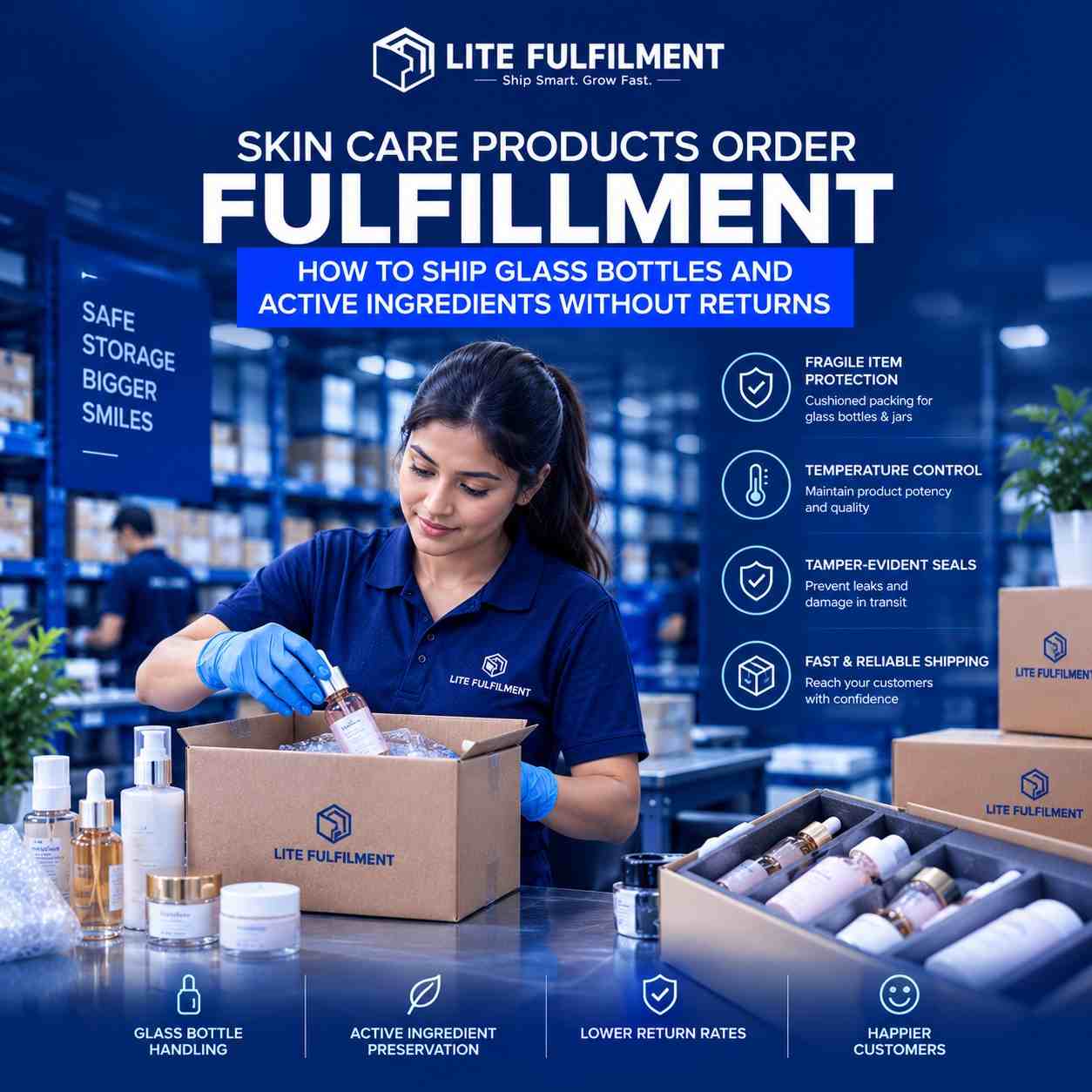
Proper skincare fulfillment uses cushioned inserts, foam dividers, or corrugated partitions. Every glass item needs individual protection inside the box. This adds seconds per order but prevents breakage claims.
Temperature Sensitivity Affects Product Quality
Vitamin C serums, retinol creams, and probiotic skincare lose effectiveness in heat. A package sitting in a hot delivery truck for eight hours in July can degrade the formula.
Climate-controlled warehousing is the first line of defense. Storage temperatures between 60 and 75 degrees Fahrenheit protect most skincare formulations. For heat-sensitive products, insulated mailers or gel packs add protection during summer months.
Your fulfillment partner should know which of your SKUs need temperature protection. Not every skincare product is heat-sensitive. But the ones that are need specific handling.
Leaks Create Customer Service Problems
Pumps, caps, and dropper seals can loosen during shipping. A leaking moisturizer or serum ruins the packaging insert and stains the box. It arrives looking damaged even if the product is fine.
Tamper-evident seals and shrink bands prevent leaks during transit. Your 3PL should apply these during packing if your manufacturer has not already added them.
What Does a Skincare 3PL Handle?
A 3PL for skincare products manages the full order lifecycle. Here is what each stage involves.
Receiving and Lot Tracking
Skincare shipments arrive from your manufacturer with lot numbers and production dates. Your 3PL logs each batch into the warehouse management system. This data supports recall traceability and expiration management.
FEFO (first expired, first out) rotation is standard for skincare. Products closest to expiration ship first. This prevents older stock from sitting on shelves while newer batches go out.
Climate-Controlled Storage
Your inventory sits in a temperature-regulated warehouse until orders come in. The storage environment protects formulations with active ingredients from heat and humidity.
Not every skincare SKU needs the same conditions. A bar soap is stable at room temperature. A vitamin C serum needs tighter controls. Your 3PL should store products based on their specific requirements.
Pick, Pack, and Ship
When a customer places an order, the 3PL picks the correct items from storage. Packing follows product-specific protocols. Glass bottles get cushioned inserts. Sets and bundles get arranged in branded packaging if the brand requires it.
Carrier selection depends on destination and speed. Ground shipping works for most domestic orders. Expedited shipping makes sense during summer months when heat exposure is a concern.
How Should Skincare Brands Handle Packaging for Shipping?
Packaging is the biggest variable in skincare fulfillment. The wrong box or the wrong void fill turns a good product into a damaged delivery.
Right-Size Boxes Reduce Damage and Cost
A skincare bottle rattling inside an oversized box is more prone to breakage. It also costs more to ship. Carriers charge by dimensional weight, not just actual weight. An oversized box increases the shipping cost even if the product is light.
Your 3PL should match box dimensions to product size. A single serum bottle needs a small box with snug void fill. A five-product set needs a box designed for that specific configuration.
Branded Unboxing Adds Value
Skincare is a premium category. Customers expect a premium unboxing experience. Tissue paper, branded inserts, and clean presentation matter.
A 3PL that supports custom packaging and branded inserts adds value beyond basic pick and pack. This is especially important for DTC skincare brands competing on brand experience.
Insulated Packaging for Summer Shipping
Between June and September, ground shipments spend hours in hot trucks and on loading docks. An insulated mailer with a gel pack keeps internal temperatures stable.
This adds cost per order. Most brands apply insulated packaging only to heat-sensitive SKUs during warm months. Your fulfillment partner should flag which products need it and when.
What Is the Return Rate for Skincare Products?
Skincare return rates run lower than most ecommerce categories. Industry averages are 3 to 5 percent compared to 15 to 30 percent for apparel.
The catch is that opened skincare products cannot be resold. A returned serum or moisturizer is a write-off. That makes preventing returns more valuable than processing them.
The two biggest causes of skincare returns are damaged products and wrong items shipped. Both are fulfillment errors. A 3PL with a high accuracy rate and proper packaging prevents most of these.
For damaged-in-transit claims, photo documentation at packing provides evidence. Your 3PL should photograph each order before sealing the box. This protects the brand when a customer files a damage claim.
How Do Skincare Brands Ship Internationally?
Cross-border skincare shipping adds compliance requirements on top of the standard fulfillment challenges.
Customs Documentation and HS Codes
Every skincare product entering a foreign market needs correct HS code classification. Moisturizers, sunscreens, and medicated creams each have different codes. Wrong codes delay shipments at customs.
Country-Specific Ingredient Restrictions
Some countries ban or restrict ingredients that are legal in the US. Hydroquinone, certain preservatives, and specific UV filters are restricted in the EU, Japan, and other markets. Your fulfillment partner should flag restricted SKUs before shipping to those destinations.
DDP vs. DDU for Customer Experience
DDP (delivered duty paid) means your customer pays nothing at the door. DDU (delivered duty unpaid) means they get a surprise bill from customs. For premium skincare, DDP is worth the extra cost. A customer paying $80 for a serum does not want a $15 duty charge on delivery.
How to Choose a 3PL for Skin Care Products
Climate-Controlled Warehousing
This is non-negotiable for skincare with active ingredients. Ask for temperature monitoring logs. A verbal promise that the facility "stays cool" is not enough.
FEFO Inventory Rotation
Your 3PL must ship older stock first based on expiration dates. Standard FIFO rotation does not work for skincare. Products sitting past their expiration date are unsellable.
Platform Integration
Your fulfillment partner should connect with your sales channels. Shopify, WooCommerce, Amazon, and TikTok Shop should all sync automatically. Manual order processing creates delays and errors.
Fragile Product Handling Experience
Ask how many skincare or beauty brands the 3PL currently serves. A provider with experience in fragile, temperature-sensitive products will have packing protocols already in place.
How Lite Fulfillment Handles Skin Care Order Fulfillment
Lite Fulfillment provides beauty fulfillment from our climate-controlled warehouse in Delaware. We serve 500+ brands with a 99.98 percent order accuracy rate. We ship to all 50 states and over 200 countries.
Our skincare fulfillment operation includes FEFO rotation, lot-level tracking, and product-specific packing protocols for glass containers. We connect with Shopify, WooCommerce, Amazon, TikTok Shop, and other major platforms.
Delaware's tax-free status saves cost on every outbound shipment. For skincare brands shipping premium products, those per-order savings add up across thousands of shipments.
Get a free quote and see how we handle skincare fulfillment for brands that cannot afford breakage or heat damage.