Food and Beverage Fulfillment Services for Growing Brands
Food fulfillment services cover the receiving, storage, picking, packing, and shipping of edible and drinkable products under conditions that keep them safe to sell. Food and beverage brands lose more orders to bad handling than almost any other category. A crushed carton, a leaked bottle, an expired lot that shipped by mistake: each one is a refund, a bad review, and a customer who does not come back.
What Food and Beverage Fulfillment Actually Involves
We handle food and beverage fulfillment for brands selling online, on marketplaces, and to wholesale buyers. This page explains how food and beverage fulfillment actually works, what separates it from general 3PL, how we run it, and what you should confirm before you hand your products to anyone.
General 3PL treats a unit as a box. Food and beverage fulfillment treats a unit as something that can spoil, leak, break, or fall out of date. That difference shows up in almost every step of the process, and it is where most generic warehouses quietly cut corners.
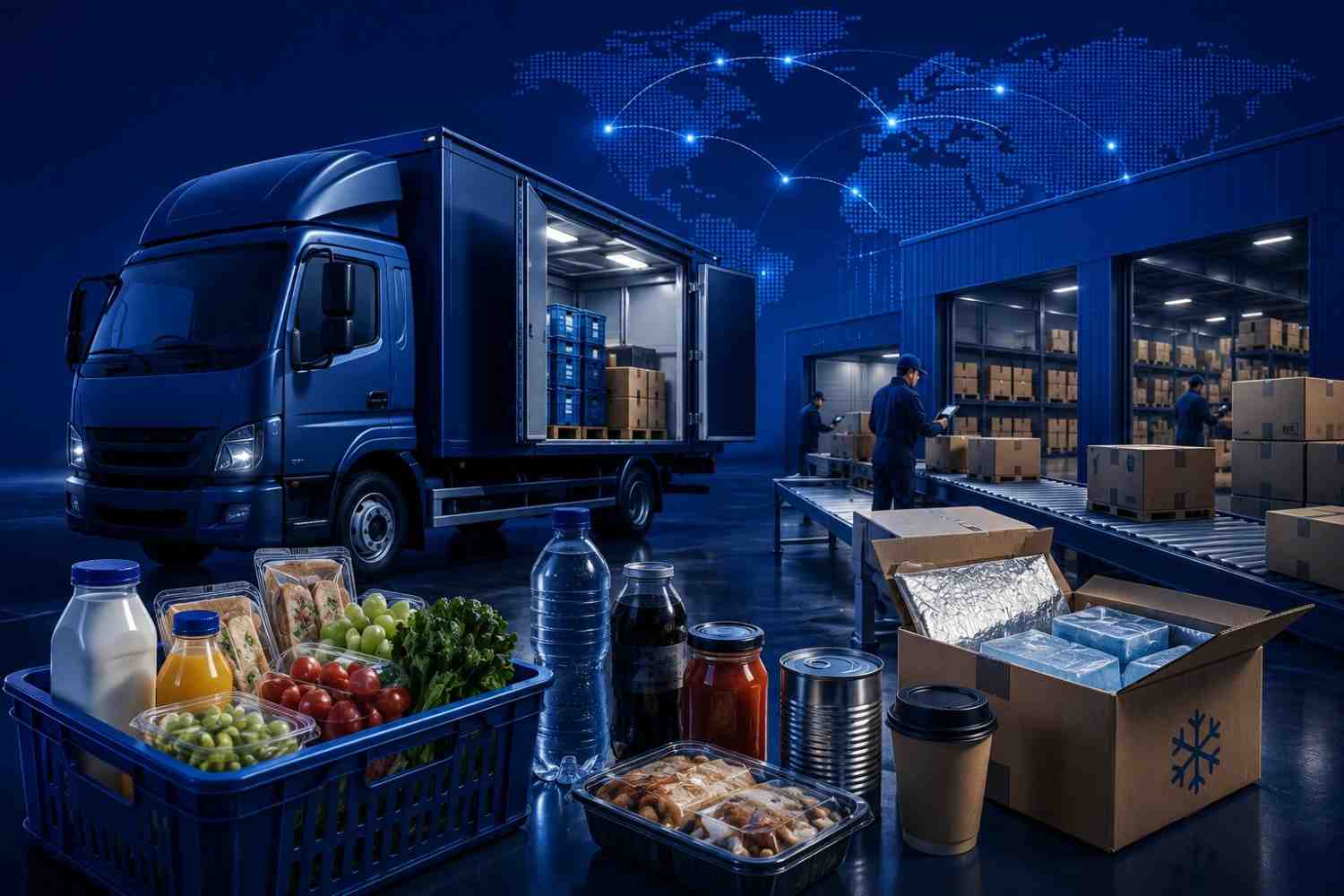
Here Is What Changes Once the Product Is Something People Put in Their Body
If a fulfillment provider cannot tell you which lot shipped to which order, they are not set up for food. Lot-level traceability is the baseline, not a premium feature.
Lot & Date Capture
Every incoming lot needs its lot code and expiration or best-by date captured at receiving, not guessed later.
FEFO Rotation
Stock rotates on FEFO (first expired, first out), not just FIFO, so the oldest-dated units ship first.
Contamination Control
Storage keeps food away from chemicals, pests, and anything that can taint it, with sanitation logged.
Allergen Separation
Allergen products are separated so cross-contact does not happen during pick and pack.
Damaged, dented, or leaking units get pulled before they reach a customer, not shipped to clear the shelf.
Shelf-Stable vs Temperature-Sensitive: Know What You're Shipping
The single biggest question in food and beverage fulfillment is temperature. Get this wrong and you either overpay for storage you do not need, or you ship a product that arrives spoiled. Most consumer food and beverage brands sell shelf-stable goods, which is where a standard food-grade warehouse fits best. Refrigerated and frozen products carry a different cost and risk profile, and not every 3PL runs cold chain. Use this to sort your own catalog before you talk to any provider:
| Category | Typical products | Storage need | Confirm with your 3PL |
|---|---|---|---|
| Shelf-stable / ambient | Snacks, coffee, tea, dry mixes, canned and bottled goods, supplements, honey, sauces | Clean, dry, pest-controlled food-grade storage at room temperature | Food-grade handling, FEFO rotation, lot and date capture |
| Refrigerated (chilled) | Fresh juices, dairy, ready meals, some sauces | Continuous cold storage plus insulated, iced packaging in transit | Whether the 3PL runs true cold chain, and its temperature logging |
| Frozen | Frozen meals, ice cream, frozen proteins | Freezer storage plus dry-ice or gel packaging and fast transit | Freezer capacity, dry-ice handling, and carrier cut-off times |
If your product needs to stay cold or frozen, ask us directly before you assume it fits. We will tell you plainly whether it matches how our facility is set up, rather than take on something we cannot run safely.
Tell us what you sell and we will tell you plainly whether it's shelf-stable, chilled, or frozen handling.
Food-Grade Warehouse Storage in the USA
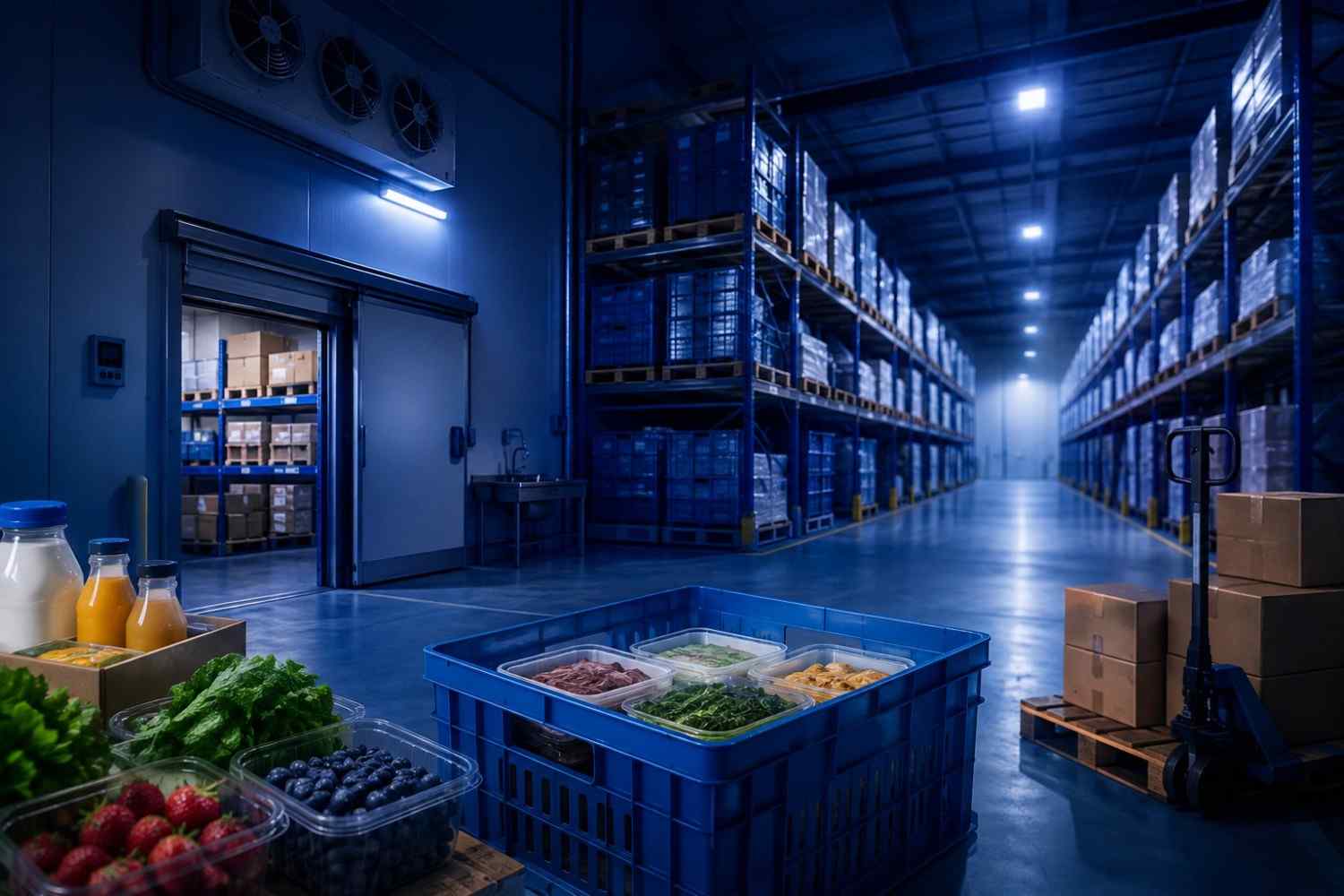
A food-grade warehouse is not just a clean building. It is a set of practices that protect product from contamination and keep every unit traceable. When brands search for a food-grade warehouse in the USA, this is what they are really asking for, whether they know the term or not. Our food-grade warehouse storage runs on real-time inventory visibility, so you can see counts, lots, and dates instead of calling to ask. Short-term and long-term storage are available, with no monthly minimums and no long-term contract required.
Our storage approach for shelf-stable food and beverage covers the practices that matter:
Product stored off the floor on racking, separated from any non-food or chemical inventory.
Scheduled pest control and sanitation with records kept, not done ad hoc.
Lot and date capture at receiving so recalls and rotation are exact, not approximate.
FEFO pick logic so the earliest-dated units leave first and dead stock does not build up.
Damage and leak inspection on receiving and again at pick, with quarantine for anything questionable.
How We Process Food and Beverage Orders
The process below is what happens from the moment your inventory arrives to the moment an order leaves the building. Each step exists to protect either the product or the paper trail behind it.
Receive & inspect
We count your inbound shipment, check for damage and leaks, and reject anything that arrived compromised so it never reaches a customer.
Capture lot & date
Lot codes and expiration or best-by dates are recorded per unit at intake, which is what makes recalls and rotation exact later.
Store food-grade
Product goes into clean, pest-controlled, food-grade storage, separated from allergens and non-food goods.
Pick on FEFO
When an order comes in, we pick the earliest-dated matching units first so nothing sits long enough to expire on the shelf.
Pack for the product
Fragile and liquid items get packed to survive transit: dunnage, leak protection, and right-sized cartons.
Dispatch same-day
Orders received before cut-off ship the same day, with tracking pushed back to your store or marketplace.
Beverage 3PL: Weight, Breakage, and Leak Risk
Beverages are their own problem. They are heavy, they break, and they leak. A beverage 3PL that packs bottles the same way it packs t-shirts will hand you a return rate that eats into your margin. Glass and liquid require packing decisions that a general warehouse rarely considers. What we account for when packing beverages:
Individual Glass Protection
Glass gets individual protection and rigid dividers, not a single wrap of paper and hope.
Movement Prevention
Bottles and jars are packed to prevent movement, because movement in transit is what cracks glass and pops seals.
Leak-Resistant Packing
Liquid orders use leak-resistant packing so one loose cap does not ruin the whole box.
Weight & Dimension Checks
Weight and dimensions are checked against carrier rules, because beverages often bill on dimensional or actual weight, whichever is higher.
For larger beverage volumes we palletize and consolidate, which lowers per-unit shipping cost for wholesale and distributor orders while keeping breakage down.
Selling Food and Beverage Online Across Channels
Most food and beverage brands do not sell in one place. They sell on their own store, on marketplaces, and sometimes wholesale, all at once. That means one pool of dated inventory has to serve several channels without overselling or shipping an out-of-date lot to a marketplace with strict date rules.
Shopify
Synced inventory for your own storefront.
Amazon
FBA prep built to expiration-date rules.
Walmart
Marketplace-ready pick, pack, and dispatch.
TikTok Shop
Fast dispatch for viral product spikes.
WooCommerce
Plugin-level order and stock sync.
eBay & Etsy
Listing-level routing for niche sellers.
Our food and beverage ecommerce fulfillment connects to all of the above, with inventory synced so a sale on one channel updates the rest. That matters more for food than for most categories, because marketplaces like Amazon enforce minimum remaining shelf-life windows and will reject inbound stock that is too close to its date.
We also handle Amazon FBA prep for food and beverage: date and lot labeling, poly bagging where required, and inbound shipments built to Amazon's current expiration-date rules. Note that Amazon ended its own FBA prep and labeling services on January 1, 2026, and commingled inventory ended March 31, 2026, so dated products now need a prep partner to meet those requirements before they ship in.
Talk to us about syncing your food and beverage inventory across every store and marketplace you sell on.
Shipping Food and Beverage Internationally
International demand for US food and beverage products keeps growing, from specialty snacks to supplements to branded drinks. Shipping food across borders is harder than shipping most goods, because food is one of the most heavily regulated categories at customs. Every destination has its own rules on ingredients, labeling, and documentation.
The Delaware advantage for food and beverage brands
Our warehouse sits in Wilmington, Delaware, which gives two practical advantages for cross-border food shipping: 0% state sales tax on inbound inventory, and close proximity to East Coast ports and airports for faster export. From there, we handle order processing and export to more than 200 countries, including customs documentation and duties guidance.
Food imports into the US are overseen by the FDA, which requires prior notice for many imported foods, and clearance runs through US Customs and Border Protection. Export rules for your destination countries can differ sharply, so we frame customs neutrally and point you to the governing authority rather than promise an outcome we do not control.
Compliance and Documentation to Have Ready
Food and beverage carries paperwork that other categories do not. Having this in order before you onboard makes launch faster and protects you if a recall or customs question ever comes up. Use this as a pre-launch checklist:
FDA food facility registration for your business, kept current (required for most food sold or imported in the US).
Accurate ingredient and allergen labeling on every SKU, matching the destination country's rules.
Lot codes and expiration or best-by dates printed clearly and consistently on units and cases.
A recall contact and process, so a specific lot can be traced and pulled fast if needed.
Product-specific restrictions checked per destination for international orders, including any that are prohibited outright.
For background on facility registration and food safety obligations, the FDA's Food Safety Modernization Act (FSMA) pages are the authoritative reference. We keep our customs and compliance framing neutral and pointed at the governing body, never at a promise we cannot back.
This page is built for shelf-stable and ambient food and beverage, which is where our food-grade storage fits best. If your product needs refrigerated or frozen (cold chain) handling, contact our team first so we can confirm whether it matches how our facility is set up before you commit.
We store shelf-stable food and beverage using food-grade practices: off-floor racking, separation from non-food and chemicals, scheduled pest control and sanitation, and lot and date tracking. For your own FDA registration and any certification your brand needs, we can confirm current details when you reach out.
Yes. We capture lot codes and expiration or best-by dates at receiving and pick on FEFO, so the earliest-dated units ship first. That lot-level traceability is what lets us trace exactly which lot went to which order if a recall ever happens.
Yes. We do date and lot labeling, poly bagging where required, and build inbound shipments to Amazon's expiration-date rules. Since Amazon ended its own FBA prep on January 1, 2026, dated food and beverage products now need a prep partner to meet those inbound requirements.
Yes, to more than 200 countries, with customs documentation and duties guidance included. Food is heavily regulated at customs, and rules differ by destination, so we confirm product-specific restrictions per country and point you to the FDA and CBP for the governing requirements.
No monthly minimums and no long-term contracts. You can use short-term or long-term storage as your volume changes, which suits seasonal food and beverage brands whose order volume moves a lot across the year.