
International Shipping from USA, Built for Global Brands
International shipping from USA is the complete service of receiving your inventory in the US, then picking, documenting, and dispatching each order to a buyer in another country. Lite Fulfillment runs it from a single US hub to more than 200 countries, so you sell the order and we pick it, pack it, clear customs, and get it delivered.
The hard part of cross-border selling is rarely the product. It is carrier selection, customs paperwork, duties, and the returns that follow. This page covers what the service includes, where we ship from and to, how DDP and DDU differ, how rates are built, and the operation behind every parcel.
What International Shipping from USA Covers
International shipping from USA covers the full path an order takes, from a shelf in our US warehouse to a doorstep abroad. That means receiving your inventory, storing it, then picking, packing, and dispatching each order to the carrier best suited to the destination. We book with DHL Express, FedEx International, UPS Worldwide, and USPS depending on speed, cost, and the country involved.
The service runs in two lanes. Parcel shipping handles individual ecommerce orders, usually under 70 kg per box, moving by air. Freight handles pallets and bulk consignments for distributors, moving by air freight or ocean depending on volume and urgency. Both lanes include the customs documents, tracking, and returns handling a cross-border order needs.
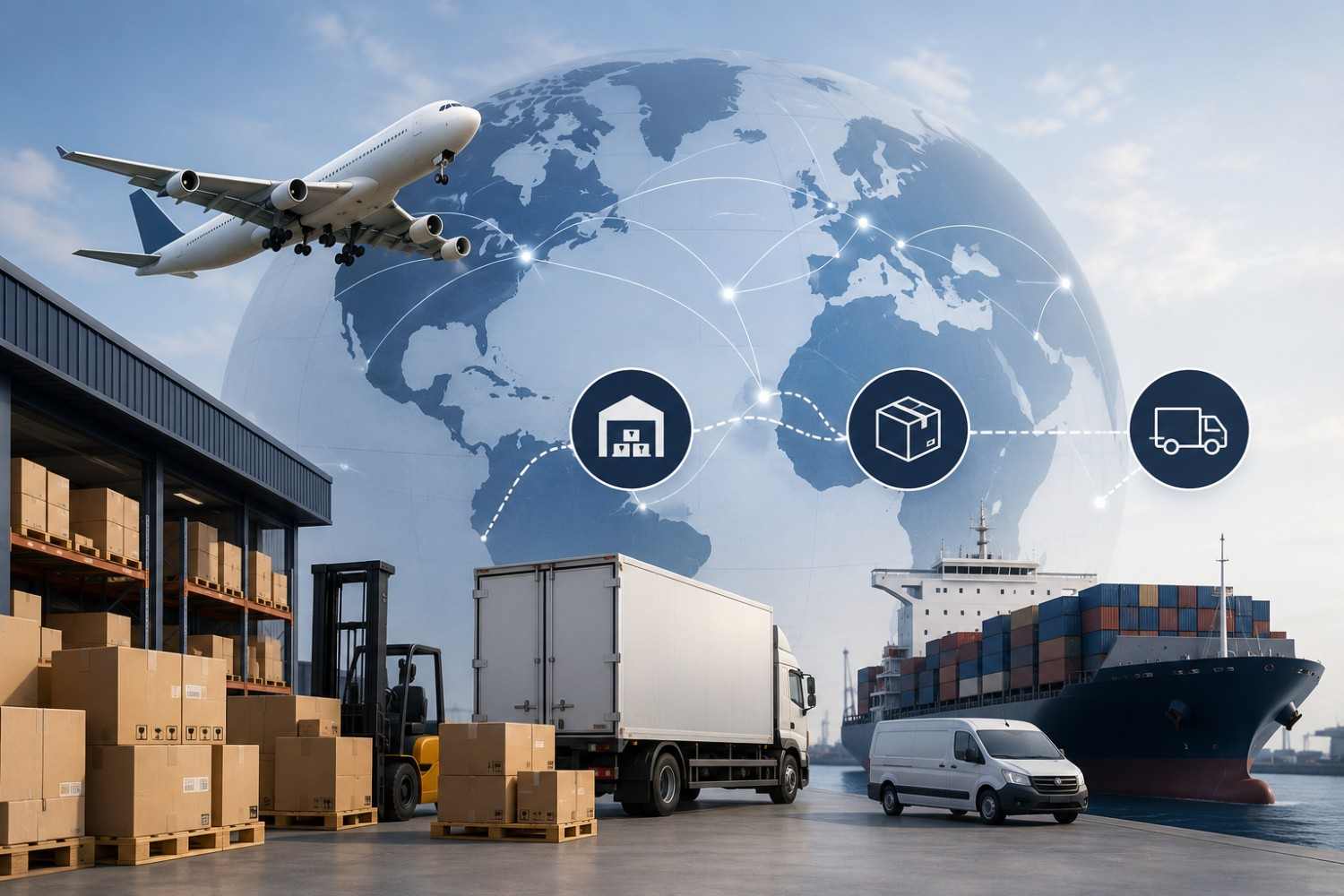
What most competitor pages leave out is the operational glue: matching each order to a compliant carrier service, generating paperwork customs will accept the first time, and giving you one tracking view across carriers. Air moves almost all of our parcel volume because customers expect days, not weeks — we reserve ocean for pallet-scale freight where the per-kilo saving is worth the longer transit.
Where We Ship From and Where We Ship To
Two questions decide most of an international shipping from USA quote: where the goods start and where they need to end up.
Wilmington, Delaware
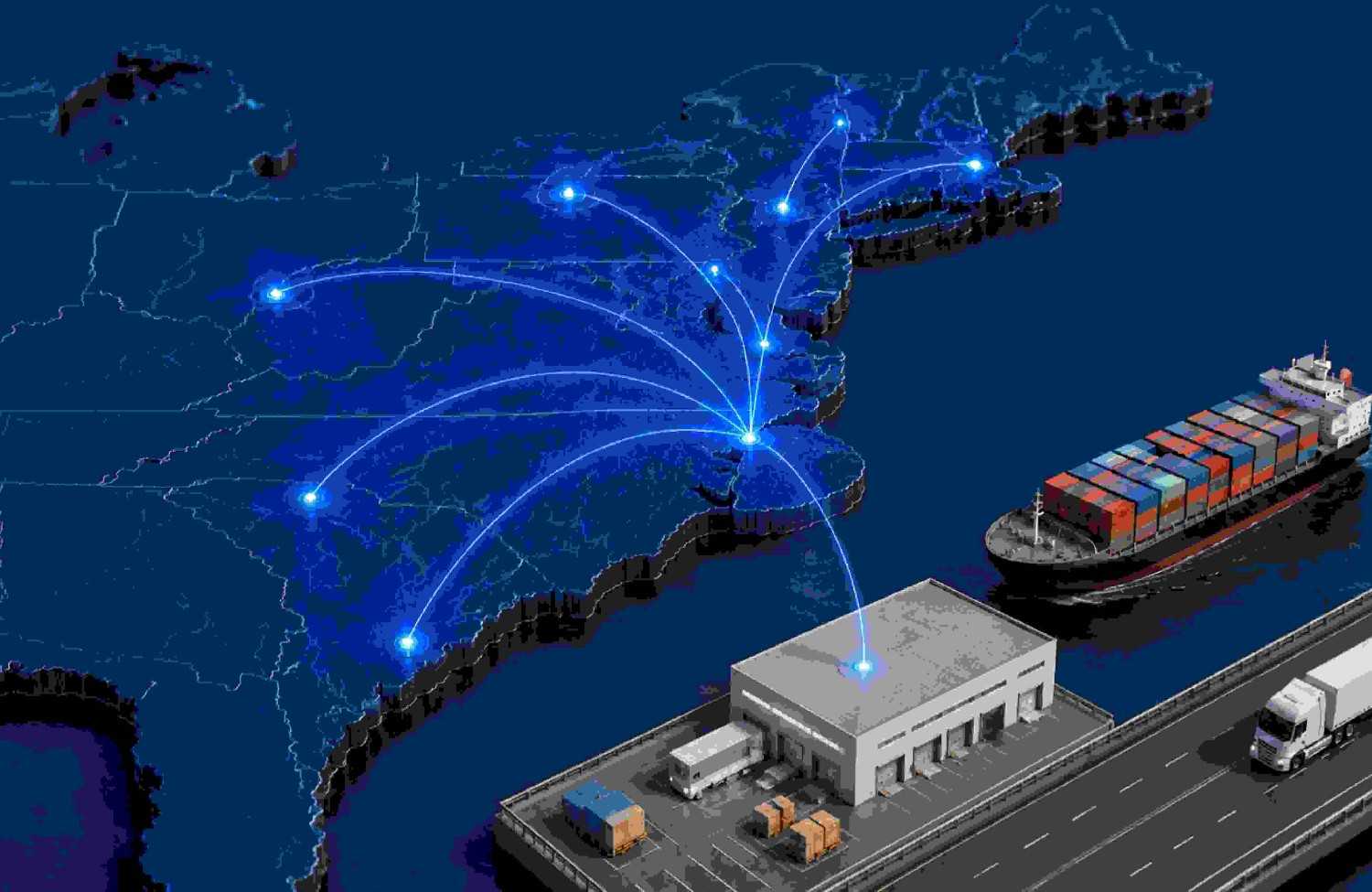
Our warehouse sits in Wilmington, Delaware, one of the few US states with no state sales tax. For a company holding and re-exporting inventory, that removes a cost layer providers in California or New York cannot avoid on inbound goods.
Location does the rest. We are a short drive from the Port of Wilmington and close to Philadelphia International, Newark, and JFK. For air parcels, shorter first-mile drayage to the airport means later cutoffs and same-day handoff to carriers. For ocean freight, port proximity trims transit and inland trucking.
The practical effect for you: goods land, get stored, and leave for their destination country with fewer touches and lower holding cost. If you source US products to resell abroad, this hub is where consolidation, storage, and export prep happen under one roof.
200+ Countries and Priority Corridors
We ship from the USA to more than 200 countries. Volume concentrates in a handful of corridors where demand for US goods is strong and our carrier rates are sharpest. Transit times below are typical parcel ranges — planning figures, not guarantees.
| Corridor | Typical Parcel Transit | Common Method | Notes |
|---|---|---|---|
| USA to United Kingdom | 3 to 6 business days | Air express | VAT / IOSS handling available |
| USA to Nigeria (West Africa) | 5 to 10 business days | Air express | Priority lane; docs tuned per authority |
| USA to Brazil (South America) | 6 to 12 business days | Air express | Buyer tax ID required at import |
| USA to Canada | 3 to 7 business days | Air or ground | Nearshore, low friction |
| USA to United Arab Emirates | 4 to 8 business days | Air express | Fast Gulf clearance |
| USA to Germany (EU) | 4 to 8 business days | Air express | IOSS supported for low-value B2C |
| USA to Australia | 5 to 10 business days | Air express | Remote-area surcharges apply |
In short, this is worldwide shipping from USA at practical scale, priced and documented per corridor rather than sold as one flat promise.
Our Corridor-Readiness Check
Every country bans or restricts something, and the list rarely matches your intuition. Batteries, liquids, supplements, cosmetics, and certain electronics face rules that differ by destination. We run this check before opening any new lane.
Destination prohibited and restricted list checked against your catalog, SKU by SKU
Any item needing a license, permit, or special packaging flagged before it ships
Buyer tax or import ID requirement confirmed for the destination
DDP availability checked for the lane, or the lane set to DDU where prepaid duty is not accepted
Typical transit range and carrier method set, so your checkout promise is realistic
A per-country document profile built once, then reused for every repeat shipment
It is cheaper to learn a SKU cannot travel a route now than to have a pallet seized later. This check is also why repeat lanes get faster: the second shipment to a country reuses a document profile the first one already proved.
How Duties and Taxes Work: DDP vs DDU Shipping from USA
The single biggest choice in cross-border shipping from USA is who pays duties and taxes at the border, and when. That shapes both your customer checkout and your cart abandonment rate.
| Factor | DDP (Delivered Duty Paid) | DDU (Delivered Duty Unpaid) |
|---|---|---|
| Who pays duties and tax | You, prepaid at checkout | Buyer, on arrival |
| Buyer checkout | One clean total | Lower total, surprise bill later |
| Cart abandonment risk | Lower | Higher for B2C |
| Best for | DTC and retail buyers | B2B and distributors |
| Cost visibility | Full, upfront | Partial until delivery |
For direct-to-consumer brands, DDP almost always wins, because a clean total at checkout protects conversion. For B2B and distributor shipments, DDU can be fine, since the importer expects to clear its own goods. We support both and set the default that fits your model.
A Simple Rule for Choosing DDP or DDU
In practice we set the default with three questions, asked in order. First, is the buyer a consumer or a business? Consumers get DDP so the price they see is the price they pay. Businesses usually take DDU because they clear their own goods and reclaim tax. Second, does the destination accept prepaid duty on this lane? If it does not, the lane defaults to DDU no matter who the buyer is. Third, is the order value near a duty threshold? Close to a threshold, DDP removes the guesswork and prevents a refused delivery.
Where a destination will not accept prepaid duty, we say so up front, so nothing about your international shipping from USA setup surprises your buyer at the door.
How International Shipping Rates Are Calculated
International shipping rates from the USA are not one number. Each rate is built from a few inputs, and knowing them helps you price your own orders correctly.
Carriers bill on the greater of actual weight or dimensional weight, so a light but bulky parcel can cost more than its scale weight suggests. On top of that sits the destination zone, the service level you choose, fuel surcharges, and any remote-area or residential fees. Duties and taxes are separate again, and under DDP they get added to what the buyer pays.
A 30 by 30 by 30 cm box weighing 2 kg on the scale carries a volumetric weight near 5.4 kg under the common divisor carriers use for air. You get billed on 5.4 kg, not 2 kg. Pack the same goods in a right-sized 30 by 25 by 15 cm carton and the volumetric weight drops below the actual weight, so you pay for 2 kg. Packaging choices like that quietly decide close to a third of your international shipping from USA cost.
We quote per order rather than locking you into monthly minimums or long-term contracts. That keeps pricing honest and lets seasonal brands scale up and down without penalty. Send your typical box sizes, weights, and top destinations, and we return a rate card you can plug straight into checkout.
What Actually Drives Your Per-Order Cost
The order that protects your margin is usually this: right-size the box first, choose the service level second, and treat duty as destination-specific rather than a flat add-on.
Customs Documentation We Handle
Customs delays almost always trace back to paperwork, not the parcel. We prepare and file the documents each shipment needs so it clears the first time.
Commercial Invoice
Accurate values and HS codes on every commercial invoice we file.
Packing List
Matched line for line to the invoice for every shipment.
HS / HTS Classification
Correct classification for every SKU going cross-border.
Certificate of Origin
Prepared where the destination requires it.
Electronic Export Information
Filed for shipments above the reporting threshold.
IOSS / VAT Identifiers
Handled for EU-bound B2C orders.
Plus dangerous goods declarations for restricted items where required.
The US de minimis treatment that once let many low-value parcels enter duty-free was suspended for affected shipments in 2025, so we frame every shipment around current rules rather than an outdated shortcut. For authoritative classification and entry guidance, US Customs and Border Protection and the Harmonized Tariff Schedule are the reference.
We keep a per-country document profile, so repeat shipments to the same market reuse a known-good template. That single habit is where most of the speed in international shipping from USA actually comes from.
The Three Things That Hold Parcels at the Border
In our experience, most clearance holds come from three causes: a declared value that does not match the goods, a missing or wrong HS code, and an incomplete address or tax ID for the buyer. We check all three before dispatch. That pre-flight step is unglamorous, but it is why a documented shipment usually walks through customs while an undocumented one waits in a queue.
The Fulfillment Operation Behind Every International Order
Shipping is the last mile of a longer job. Behind every parcel we send abroad is the full multi-channel ecommerce fulfillment stack, all under one roof.
Our order accuracy runs at 99.98%, and most orders received by our cutoff dispatch the same day. Inventory syncs in real time with Shopify, Amazon, Walmart, WooCommerce, TikTok Shop, eBay, and Etsy, so you are not overselling stock already committed to another channel. Every international shipping from USA order we send runs through this one operation, not a chain of hand-offs.
Amazon FBA Prep for International Sellers
Plenty of overseas sellers use the USA as their launch pad into Amazon. We handle Amazon FBA prep for international sellers from our US hub, which saves the inbound cost and rejection risk of prepping abroad — see our Amazon FBA prep services.
That includes FNSKU labeling, polybagging, bundling, and handling for fragile or oversized units, then compliant inbound shipments to the fulfillment centers Amazon assigns. For sellers running Fulfilled by Merchant, we ship directly to the customer under your account. We work from Amazon Seller Central current prep and packaging guidance rather than last year's rules.
Packaging Built to Survive the Trip
A cross-border parcel gets handled more times than a domestic one. We pack for the journey it will actually take: right-sized cartons, internal protection for fragile units, and moisture-aware materials for humid corridors like West Africa and parts of South America.
Returns Handled on the US Side
We build a return path into your setup from day one, with a US return address, inspection rules, and a restock-or-dispose decision you control — see our returns management service.
Running It Yourself vs. Using Lite Fulfillment
You can run international shipping from USA in-house. The real question is what it costs you in accounts, paperwork, and time once volume grows.
| Task | Doing It Yourself | With Lite Fulfillment |
|---|---|---|
| Carrier accounts | Negotiate each separately | Pre-negotiated multi-carrier rates |
| Customs paperwork | Learn per country, redo often | Prepared and filed per shipment |
| Duties handling | Manual and error-prone | DDP or DDU set to your model |
| Returns abroad | No clear path | Inspected and restocked in-house |
| Tracking | Carrier by carrier | One view across carriers |
| Your time | High and rising | Spent on the business |
How a US-to-Anywhere Order Flows
Here is the exact path an order takes in international shipping from USA, from inventory landing with us to the parcel arriving overseas.
Inventory Arrives
You send stock to our US hub; we receive and count it.
Stored & Synced
Goods are shelved; counts sync to your sales channels.
Order Placed
A customer abroad orders; the order drops into our system.
Pick & Pack
We pick the SKUs and pack to survive a cross-border trip.
Documents Generated
Invoice, HS codes, and any IOSS or origin papers are created.
Carrier Dispatch
We book the best-fit carrier and hand off, often same day.
In Transit
You and the buyer track one link across the whole journey.
Delivery & Returns
The parcel clears and delivers; any return routes back to us.
Source US Products Without a US Entity
If you are an overseas wholesaler or distributor buying US products, our assisted purchasing service sources from verified US suppliers on your behalf, consolidates everything in our hub, preps it, and exports it to you.
Up to $500,000 in trade credit for qualified international clients, so you can place larger orders without tying up your own cash first.
No US entity, no multiple shipping relationships — one consolidated shipment with the documents already handled.
Why Brands Choose Lite Fulfillment
Numbers We Stand Behind
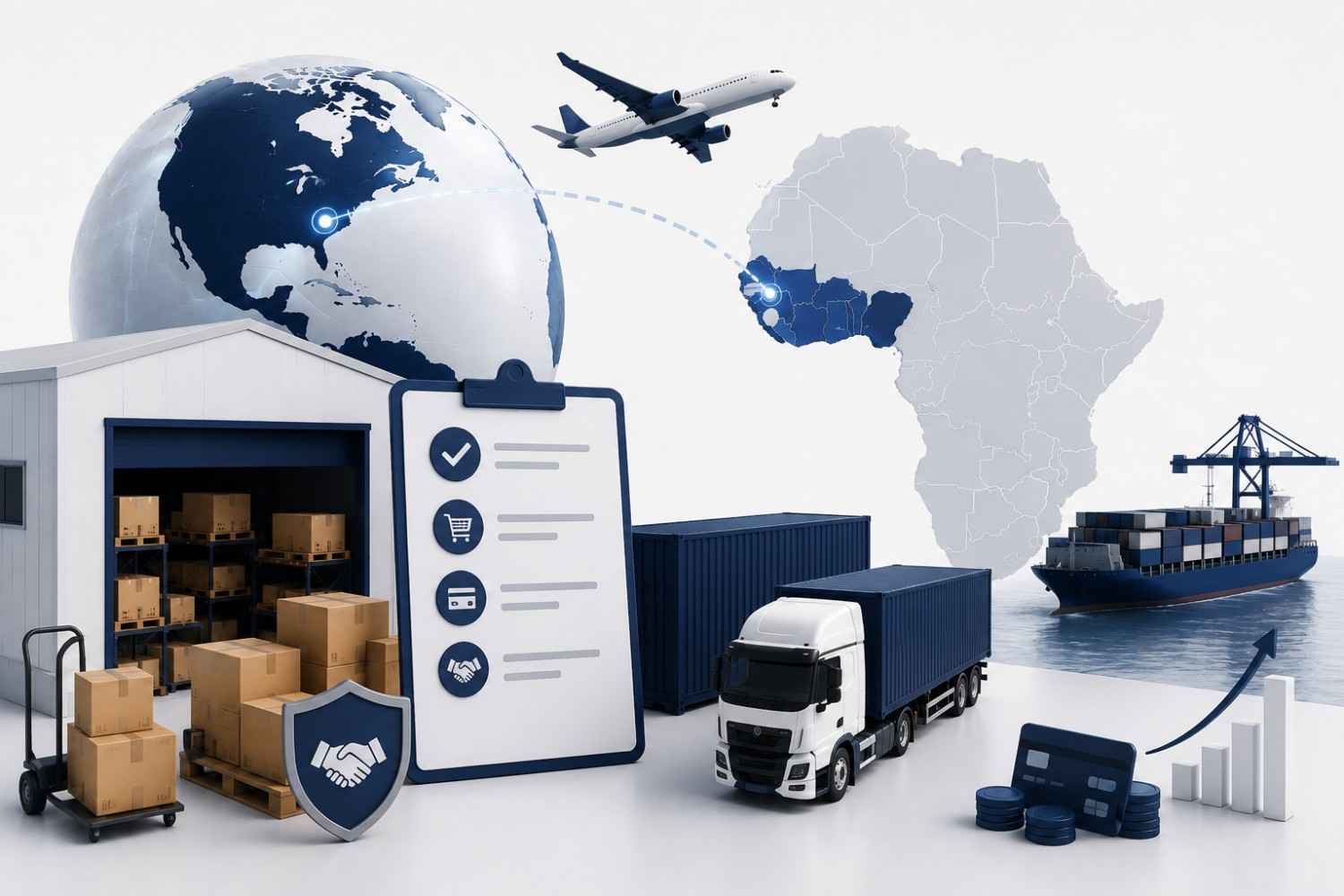
99.98% order accuracy, same-day dispatch on orders before cutoff, and shipping to 200+ countries for 500+ brands.
No Contracts, No Minimums
We quote per order rather than locking you into monthly minimums or long-term contracts.
An Operator, Not a Queue
You talk to the people who actually run your fulfillment — not a support ticket queue.
0% Sales Tax East Coast Hub
Wilmington, Delaware — no state sales tax, minutes from the Port of Wilmington and Philadelphia International.
International Shipping from USA FAQ
Everything you need to know about shipping from our US hub to the world.
Get a QuoteIt depends on the destination and service. Typical parcel transit runs 3 to 6 business days to the UK, 4 to 8 to the EU and UAE, and 5 to 12 to West Africa and South America. These are planning ranges, not guarantees, since customs and carrier schedules vary. We confirm a realistic window for your specific corridor before you commit.
Yes. We prepare the commercial invoice, packing list, HS code classification, certificate of origin where needed, and export filings above the reporting threshold. For EU B2C orders we support IOSS and VAT identifiers. We keep a per-country document profile, so repeat shipments reuse a known-good template and clear faster.
Under DDP, you collect duties and taxes at checkout and we prepay customs, so the buyer owes nothing on arrival. Under DDU, the buyer pays duties on delivery. DDP protects conversion for direct-to-consumer brands; DDU suits B2B shipments where the importer expects to clear its own goods.
More than 200. Our strongest corridors are West Africa, including Nigeria, Ghana, and Senegal, and South America, led by Brazil, alongside daily lanes into the UK, the EU, Canada, the UAE, and Australia. If a carrier reaches it and it is legal to import, we can usually ship there.
Yes, through our assisted purchasing service. We source from verified US suppliers, consolidate the goods at our hub, and handle export, with up to $500,000 in trade credit for qualified international buyers. That lets overseas wholesalers buy American products without setting up a US entity.
Yes. We handle FNSKU labeling, polybagging, bundling, and fragile handling, then send compliant inbound shipments to the fulfillment centers Amazon assigns. For Fulfilled by Merchant, we ship directly to the buyer under your account. We follow Amazon Seller Central current prep rules.
No. We quote per order and do not require monthly minimums or lock-in contracts. Seasonal and growing brands can scale volume up or down without penalty.
Rates are built from the greater of actual or dimensional weight, the destination zone, the service level, fuel surcharges, and any remote-area fees. Duties and taxes are separate and, under DDP, added to the buyer total. Send your box sizes, weights, and top destinations, and we return a rate card.
Ready to Ship from the USA to the World?
International shipping from USA does not have to mean five vendors, surprise duty bills, and parcels stuck in customs. Send us your box sizes, weights, and top destinations, and we will turn it into a rate card and a workflow you can run on.
Thank You!
Thanks for reaching out. A member of our fulfillment team will be in touch within 1 business day.
Kindly contact us on this number: +1 (302) 765-8843