

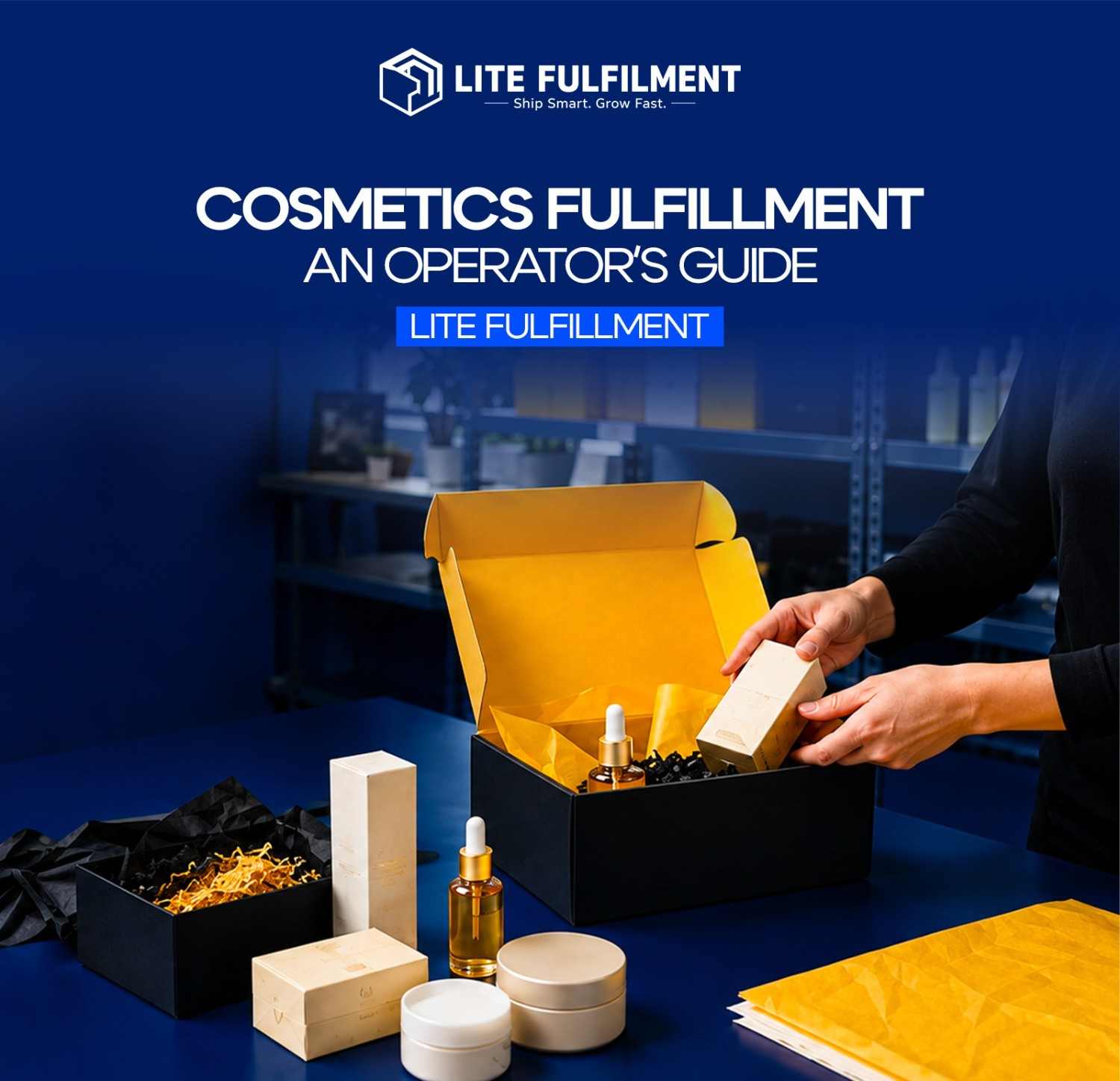
Cosmetics fulfillment looks simple from the outside: store the products, pick the orders, ship them out. Then the first pallet of foundation arrives with a 14 month shelf life, a customer reports a leaking serum, and a retail PR drop needs 300 branded boxes assembled by Friday. Beauty products carry rules that most general merchandise never touches, including batch codes, expiration dates, temperature sensitivity, and transport limits on anything flammable.
This guide covers how cosmetics fulfillment works day to day, what separates a beauty-ready operation from a generalist warehouse, and the questions to ask before you hand over inventory. The details below come from the receiving dock, not a brochure.
What Cosmetics Fulfillment Actually Involves
Cosmetics fulfillment is the full cycle of receiving, storing, picking, packing, and shipping beauty products on behalf of a brand, plus the extra controls those products demand. The core motions match any beauty and cosmetics fulfillment operation: inventory arrives, gets counted and stored, and orders ship as they come in. The difference is in the controls layered on top. Every unit has a batch or lot code that ties back to a production run. Many have a period-after-opening symbol or a hard expiration date. Some cannot ride in a passenger aircraft. A serious cosmetics 3PL captures those attributes at receiving and carries them through every downstream step.
Skincare, color cosmetics, fragrance, hair care, and nail products each behave a little differently on the shelf and in the box. A partner that treats a bottle of retinol the same way it treats a phone case will eventually ship something short-dated, crushed, or non-compliant. That is the gap this guide is written to close.
Why Beauty Products Are Harder to Fulfill Than Most SKUs
Three properties make beauty harder than the average catalog. Understanding them explains most of the operational choices later in this guide.
They expire
Sunscreen, vitamin C serums, and many actives degrade over time. A unit that sits in the wrong slot for a year can reach a customer with only a few months of usable life, which drives complaints and returns. Expiry has to be tracked at the lot level and used to drive picking order.
They leak, melt, and shatter
Glass droppers, pumps, and cream jars fail under pressure and heat. Packing beauty is a discipline of its own: leak bands, inner poly, void fill that actually holds a bottle in place, and cartons sized so nothing rattles. Poor packing turns a healthy margin product into a returns problem.
They are regulated for both content and transport
Labeling is governed by cosmetic rules, and anything flammable is governed by transport rules. A fulfillment partner has to respect both at once. We cover the labeling side under MoCRA below and the transport side under restricted items.
Batch Codes, Lot Tracking, and Expiration Control
Lot tracking is the backbone of cosmetics fulfillment services. At receiving, each inbound is logged against its batch or lot number and, where printed, its expiration or manufacture date. That single step makes three later actions possible: picking the oldest stock first, pulling a specific batch during a recall, and answering a customer question about the code stamped on their jar.
First-expiry, first-out (FEFO) is the picking rule that fits beauty better than plain first-in, first-out. FEFO ships the unit closest to its limit next, so short-dated stock clears before it becomes unsellable. For a brand carrying SPF or actives, FEFO is the difference between rotating stock cleanly and writing off a pallet.
Receiving checklist for cosmetics inventory
- Record batch or lot number for every SKU at intake.
- Capture expiration or period-after-opening data where printed.
- Quarantine and flag any units with damaged seals or crushed cartons.
- Photograph the inbound condition for high-value or fragile lines.
- Match received quantities to the advance shipping notice before putaway.
- Assign storage slots by temperature need, not just by open space.
Labeling and MoCRA: What the Brand Owns and What a 3PL Supports
The Modernization of Cosmetics Regulation Act of 2022 (MoCRA) expanded federal oversight of cosmetics in the US. It introduced facility registration for makers, product listing, safety substantiation, adverse event reporting, and the concept of a responsible person for each product. The important point for fulfillment is who owns what.
The brand is the responsible person. Product safety, ingredient disclosure, and label accuracy sit with the brand or its manufacturer, not with a warehouse that stores finished goods. A distribution partner that only stores and ships is generally treated differently from an establishment that manufactures or processes product.
A fulfillment partner supports compliance operationally. That means capturing lot data so a specific batch can be located, keeping documentation that shows where stock went, applying brand-supplied labels correctly, and inspecting returns before anything goes back to sellable. Advertising and marketing claims, meanwhile, fall under separate FTC advertising rules, which is another reason label and insert copy should be locked by the brand before it reaches the pack station.
Storage Conditions and Restricted Items
Beauty inventory does not tolerate a hot, uncontrolled warehouse. Heat separates emulsions, warps lipstick, and shortens the life of actives. Cosmetics should be stored in a clean, climate-aware environment away from direct sun and moisture. Our Delaware warehouse gives brands a controlled East Coast base for this kind of stock, close to major ports and carrier hubs for fast outbound.
The harder issue is restricted items. Several common beauty products are classed as dangerous goods for transport because they are flammable or pressurized:
- Aerosols such as dry shampoo, setting spray, and hairspray.
- Nail polish and nail treatments (flammable liquids).
- Perfume, cologne, and other alcohol-based fragrance.
- Some solvent-based removers and certain hair products.
These items are subject to carrier and air transport rules and frequently cannot move by standard air service. They often ship by ground, by limited-quantity provisions, or through carriers set up for dangerous goods. Any brand with these SKUs should confirm handling and routing with its fulfillment partner in writing before listing them for expedited or international shipping.
PR Kitting, Influencer Boxes, and Launch Surges
Beauty runs on launches. A new shade range, a seasonal set, or an influencer seeding campaign turns fulfillment into an assembly job with a deadline. This is where kitting and bundling earns its keep: multiple components combined into one branded unit, with inserts, tissue, ribbon, and a printed card, packed to look right on camera. PR kits in particular are judged on presentation, because they exist to be unboxed publicly.
The operational trap is timing. Kitting has its own lead time for component receiving, assembly, and quality checks. A 300-unit PR drop scoped the week of the launch will slip. Scoped three to four weeks out, with components confirmed in advance, it ships clean. Treat launch kitting as a project with a start date, not a same-week request.
Returns and Inspection for Beauty Orders
Returns are where cosmetics fulfillment gets strict. Opened, used, or tampered beauty products usually cannot be resold for hygiene and safety reasons, so a return is not automatically a restock. Every returned beauty order needs a person to inspect it and make a call. Strong returns management for beauty means graded inspection, clear rules for what goes back to sellable, and disposal handling for what does not.
Return outcomes for cosmetics
| Returned Condition | Typical Outcome | Why |
|---|---|---|
| Sealed, unopened, in date | Restock to sellable | Integrity intact, safe to resell |
| Opened or used | Not resellable, dispose | Hygiene and safety risk |
| Damaged in transit | Dispose, file carrier claim | Packaging or handling failure |
| Short-dated on return | Quarantine, review | May fail FEFO thresholds |
Because so few beauty returns go back to shelf, the real value of returns handling here is data: knowing why items come back (leak, wrong shade, damage) so the brand can fix packaging, listings, or QC upstream.
How to Choose a Cosmetics Fulfillment Partner
Not every warehouse is set up for beauty. The table below shows where a generalist operation and a cosmetics-ready one diverge. Use it as a filter when you compare cosmetic fulfillment companies.
| Capability | Generalist 3PL | Cosmetics-Ready 3PL |
|---|---|---|
| Batch and lot capture at intake | Often not tracked | Standard at receiving |
| FEFO expiration picking | Rare | Built into pick logic |
| Restricted item handling | Inconsistent | Defined routing and carriers |
| Climate-aware storage | Not guaranteed | Planned by product type |
| PR and influencer kitting | Limited | Assembly with QC and lead time |
| Beauty returns inspection | Restock by default | Graded, hygiene-aware |
How cosmetics move through our warehouse
- Receive and log every unit against its batch and expiration data.
- Quality check and quarantine anything with damaged seals or cartons.
- Store by product type in a clean, climate-aware slot.
- Pick by FEFO so the closest-dated stock ships first.
- Pack with leak protection and fit-for-fragility void fill.
- Dispatch with tracking and correct routing for any restricted items.
Partner selection checklist
- Do they capture batch and lot numbers at receiving?
- Can they pick by expiration date, not just by age?
- How do they handle aerosols, polish, and fragrance?
- Is storage climate-aware for skincare and color?
- Can they assemble and QC PR and subscription kits on a set timeline?
- How do they grade and document beauty returns?
- Will they confirm restricted-item handling in writing?
Shipping Cosmetics Beyond the US
Selling beauty internationally adds customs, duties, and country-level cosmetic rules to the mix. Ingredient restrictions and labeling requirements vary by market, so a product that clears in one country may need a different label or formulation note in another. Restricted items face the same flammable-goods limits across borders, often more strictly by air.
For brands expanding this way, the fulfillment side is one input among several, alongside the brand's own regulatory review for each destination. Lite Fulfillment ships to more than 200 countries and works across major carriers, and beauty stock sits inside our broader industry fulfillment coverage. Customs framing should always point to official guidance for the destination rather than assume duty-free or fast-lane entry.
FAQ
Cosmetics fulfillment is the storage, pick, pack, and shipping of beauty products for a brand, with extra controls beauty demands: batch and lot tracking, expiration-based picking, climate-aware storage, and handling for flammable items like aerosols and nail polish.
A beauty-ready 3PL captures batch and expiration data at receiving and picks by first-expiry, first-out (FEFO), shipping the closest-dated stock first. This protects short-dated lines such as SPF and vitamin C serums from reaching customers near their limit.
Perfume, aerosols, and nail polish are flammable dangerous goods and usually cannot travel by standard air service. They ship by ground, under limited-quantity rules, or via carriers set up for dangerous goods. Confirm handling with your partner in writing before listing them.
Under MoCRA, the brand is the responsible person for product safety and labeling. A fulfillment partner that stores and ships finished goods supports compliance operationally through lot capture, documentation, and returns inspection, but does not take over the brand's regulatory duties.
Usually only if they come back sealed, unopened, and in date. Opened or used beauty products are not resellable for hygiene and safety reasons, so most returns are inspected, graded, and either restocked or disposed of rather than automatically returned to shelf.
Scope launch kitting three to four weeks ahead. Kitting needs lead time for component receiving, assembly, and quality checks. A large PR drop requested the same week as the launch will usually slip; planned early, it ships on schedule.
Conclusion
Cosmetics fulfillment rewards the details: batch codes captured at the door, FEFO picking that clears short-dated stock, packing that keeps glass and pumps intact, and returns handled with hygiene in mind. A generalist warehouse can move boxes, but beauty needs a partner that treats expiration, restricted items, and launch kitting as core work rather than exceptions. Get those controls right and fulfillment stops being a source of complaints and starts protecting the brand you have built.
If you want a fulfillment partner that already runs this workflow for other beauty brands, talk to our team.