

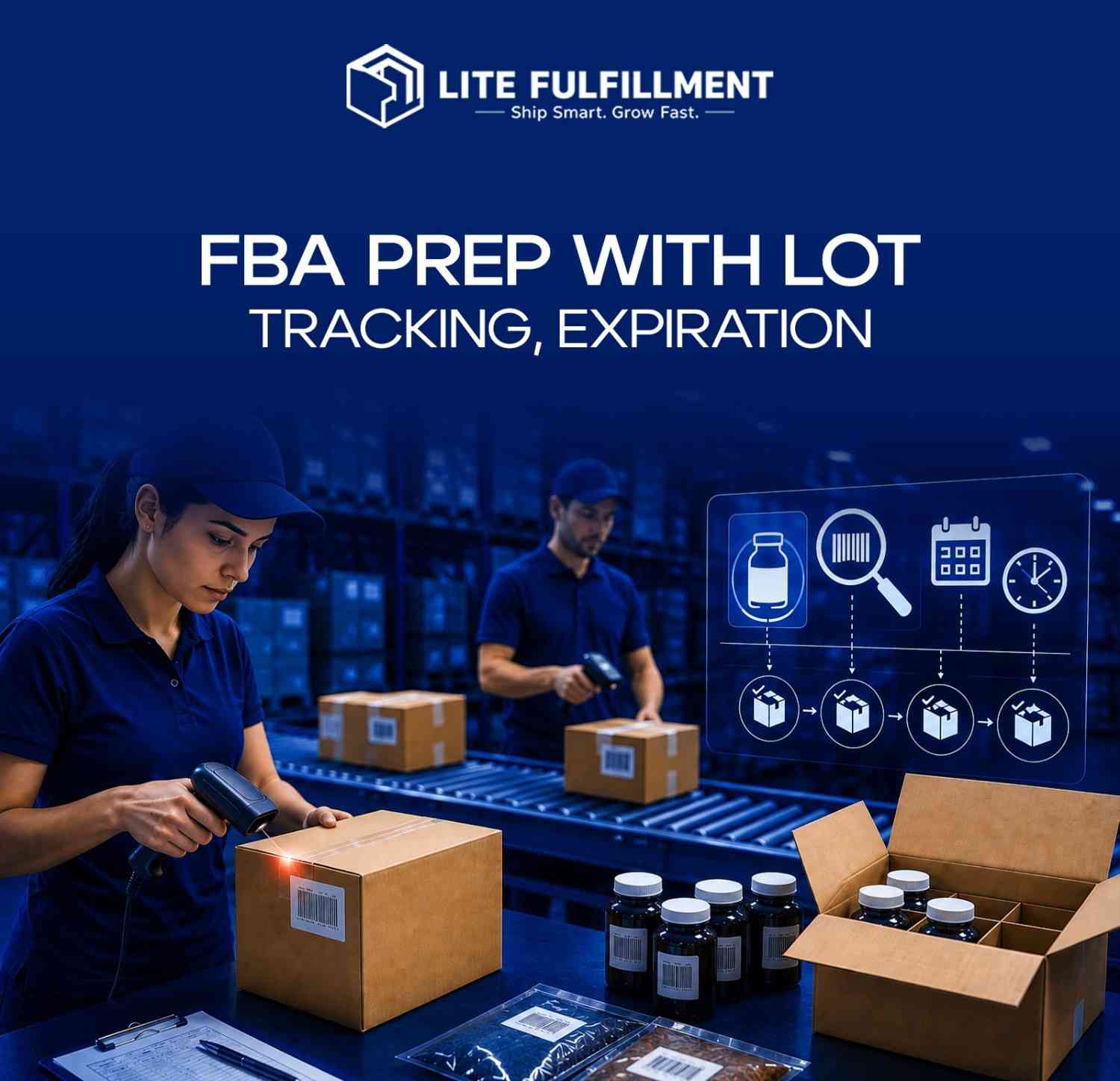
FBA prep with lot tracking means recording the lot or batch number and expiration date of every unit before it ships to Amazon, so you can trace any shipment later and act fast if a batch has a problem. If you sell anything dated, such as supplements, food, drinks, or beauty products, this is not optional. Amazon ships expiration-dated inventory using FEFO, first expired first out, and it removes units before they expire. Miss the rules and you can lose stock you already paid for. This guide covers how lot tracking works, what Amazon expects on expiration dates, and how we inspect dated products before they go in.
What FBA prep with lot tracking actually does
FBA prep with lot tracking means we record the lot or batch number and the expiration date of each unit as it arrives, then tie that record to the shipment that goes to Amazon. If a batch later has a defect, you know exactly which units were affected and which shipment they went into. This sits on top of our Amazon FBA prep service, alongside the usual steps like FNSKU labeling and polybagging.
Without it, all your units look the same once they reach Amazon. With it, every unit has a paper trail: where it came from, its batch, and when it expires. That trail is the difference between a clean fix and a guessing game.
Which products need expiration and lot control
Not every product needs this. Dated and consumable products do. If a customer puts it in or on their body, or it goes off over time, it should be tracked. The common ones are:
- Supplements, vitamins, and nutraceuticals
- Food and beverages
- Beauty, skincare, and personal care items
- Anything with a printed expiration, use-by, or best-by date
If you run a supplement brand, this is the core of the job, not a nice-to-have. Supplement fulfillment and other consumable lines live or die on clean dates and traceable batches. Food, beverage, and beauty products carry the same weight.
How Amazon handles expiration-dated inventory
Amazon does not treat dated products like regular stock. It ships them using FEFO, which stands for first expired, first out. The units expiring soonest go out first, so older stock does not sit on the shelf and expire.
Amazon also removes expiration-dated units before they reach their date, on its own schedule. If your stock gets too close, Amazon can pull it, and you can lose units you already paid for. Amazon Seller Central lists the current shelf-life thresholds and date rules. These change from time to time, so check them before every send instead of trusting an old number.
Amazon's expiration date rules, in plain terms
The exact thresholds shift, but the basics hold. Before you send a dated product to Amazon, check each unit against this list:
- The expiration date is printed on the unit itself, not only on the outer case.
- The date is legible and will not smudge or rub off during handling.
- The date is in the format Amazon currently asks for (confirm on Seller Central).
- The unit has enough remaining shelf life on arrival to clear Amazon's minimum.
- Packaging is sealed, and for meltable or sensitive items it is suitable for storage.
- Lot or batch numbers are recorded so the unit can be traced later.
We run this check on dated units during prep, so a missing or unreadable date is caught in our warehouse, not rejected at an Amazon fulfillment center.
How we inspect dated units before they ship
Inspection is where lot tracking earns its keep. Here is the order we work in for a dated product:
Receive and log
We record the lot or batch number and the expiration date as units arrive.
Check the date
We confirm the date is printed, legible, and in the format Amazon expects.
Check condition
We look for damage, leaks, broken seals, and short remaining shelf life.
Sort by date
We keep different lots and dates separate so nothing gets mixed together.
Label and send
We add the FNSKU, prep to Amazon's rules, and ship, with the lot and date on record.
If a unit fails any step, we flag it instead of shipping a problem into Amazon. That is the point of how our FBA prep works for dated goods: catch it early, on our floor.
With lot tracking vs without: what changes
The value is easiest to see side by side. Here is what the same event looks like with and without lot tracking:
| Situation | Without lot tracking | With lot tracking |
|---|---|---|
| A batch is recalled | Pull everything and hope | Find the exact lot and shipment |
| Units near expiry | You learn from Amazon removals | You restock before Amazon pulls them |
| A customer complaint | Hard to trace the source | Trace it to a lot in minutes |
| Amazon inbound rejects | Guess what went wrong | Records show the unit's history |
| Audits or claims | Little paper trail | A clear record per unit |
Why lot tracking matters for recalls
A recall is the worst case, and it is exactly when lot tracking pays off. If one batch of a supplement or food product is defective, you do not want to pull every unit you own. You want to find the affected lot, and only that lot.
This is why regulators such as the FDA center recalls on lot and batch numbers. When you can name the lot, you limit the damage, keep your good stock selling, and give customers a straight answer. Without lot records, a recall turns into guesswork and lost sales.
Storing dated stock and rotating by date
Tracking dates only helps if storage respects them. We store dated stock in our Delaware warehouse and rotate it by expiration, so the units leaving first are always the ones expiring first. That keeps your FEFO clean from our floor through to Amazon.
Real-time counts show what is on hand and what is aging, so you can restock before anything is at risk of removal. That is part of warehouse storage and inventory tracking built for dated goods, not just boxes on a shelf.
FAQ
FEFO stands for first expired, first out. For expiration-dated products, Amazon ships the units expiring soonest before newer stock, so older inventory does not sit and expire. It is different from FIFO, which is based on the order stock arrived rather than its expiration date.
Yes, for dated and consumable products. The date must be printed on the unit, legible, and in Amazon's current format. Amazon also sets a minimum remaining shelf life on arrival. Check Amazon Seller Central for the exact format and day thresholds, since they change.
Amazon removes or disposes of expiration-dated units before they expire, on a set schedule. You can lose unsold stock you already paid for. Tracking dates and watching real-time counts lets you restock or remove units on your terms, before Amazon does it for you.
Lot tracking records the lot or batch number of each unit. If one batch has a defect or recall, you can find exactly which units and shipments it touched, instead of pulling all of your inventory. It is essential for supplements, food, and beauty products.
No. We never alter, cover, or reprint a manufacturer's expiration date. We confirm the date is present, legible, and correctly formatted, and we flag any unit where it is missing or unreadable. Faking or hiding a date is a compliance and safety problem, not a fix.
Yes. For dated goods we check condition, packaging, and that lot and expiration details are correct and legible before a unit ships. Problem units are flagged and held, not sent. This is a standard part of prep, not an add-on you have to ask for.
Supplements, vitamins, food, beverages, and beauty or skincare items. Anything with a shelf life or a recall risk benefits from lot tracking. If a bad batch of your product would ever need a recall, you want lot records in place before that day, not after.
Conclusion
Dated products are unforgiving. One missed expiration rule or one untraceable batch can cost you stock and standing with Amazon. FBA prep with lot tracking fixes that at the source: every unit checked, every lot and date recorded, and stock rotated by FEFO so nothing expires on the shelf. Get it right before your inventory ships, and you spend less time on removals and recalls, and more time selling.