

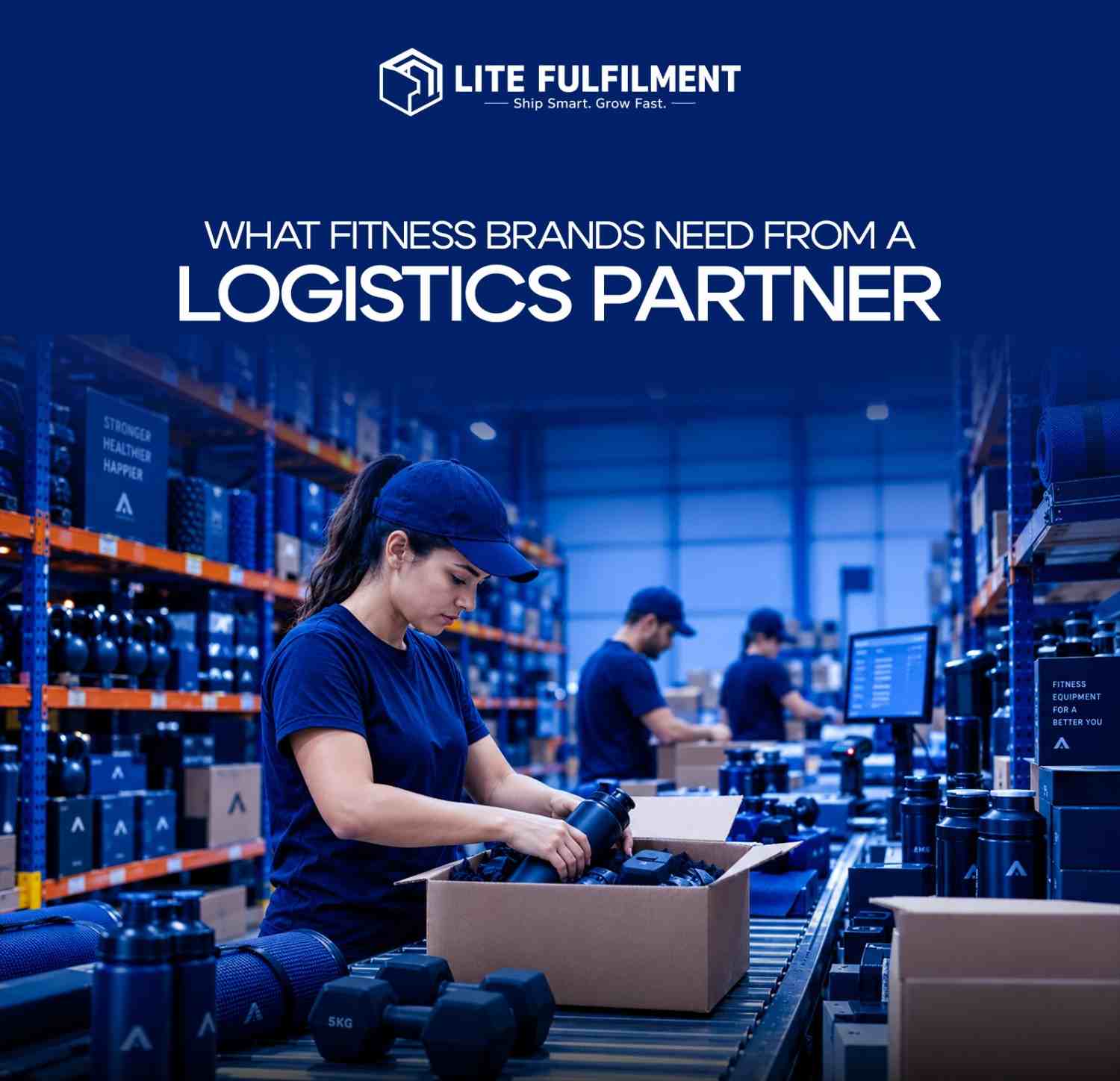
Sports and gym brand fulfillment is not standard ecommerce logistics. Fitness brands sell heavy equipment, temperature-sensitive supplements, and apparel with dozens of size and color variants. A general 3PL built for lightweight consumer goods will struggle with all three.
3PLs specializing in sports and gym brand fulfillment handle these product categories under one roof. They manage the heavy lifting of kettlebells and the lot tracking of protein powder in the same warehouse. That combination is hard to find.
Why Sports and Gym Brands Need a Specialized 3PL
A fitness brand's product catalog creates fulfillment problems that most 3PLs are not set up to solve.
Heavy and Oversized Equipment Drives Up Shipping Costs
A 35-pound kettlebell or a 50-pound weight plate costs significantly more to ship than a 1-pound supplement tub. Carriers charge by dimensional weight or actual weight, whichever is greater. Heavy fitness equipment always ships at actual weight.
Shipping a single kettlebell from California to New York can cost $25 or more by ground. A 3PL with a centrally located warehouse cuts that cost by reducing shipping zones. A mid-Atlantic location reaches most US addresses in two to three days by ground.
Supplements Require Compliance and Expiration Management
Most gym brands sell supplements alongside equipment and apparel. Protein powders, pre-workouts, and creatine all carry expiration dates. Your 3PL must use FEFO (first expired, first out) rotation. Older stock ships before newer stock.
FDA food facility registration is required for any warehouse storing dietary supplements. Not every 3PL holds this registration. A warehouse without it puts your brand at regulatory risk.
Lot tracking adds another layer. Every supplement batch needs a traceable lot number from receiving through shipment. This supports recall management if a manufacturing issue surfaces.
Apparel SKU Counts Multiply Fast
A single gym shirt in five sizes and four colors creates 20 SKUs. Add a matching pair of shorts and you have 40 SKUs from two products. Fitness apparel brands routinely manage hundreds of active SKUs.
Your 3PL's warehouse management system must handle high SKU counts without slowing down pick times. Barcode scanning at every step prevents the wrong size from shipping. A size-medium shirt sent instead of a large triggers a return, a replacement, and lost margin.
What Should a Sports and Gym 3PL Handle?
Receiving and Inventory Intake
Products arrive from multiple suppliers. Equipment from one manufacturer. Supplements from another. Apparel from a third. Your 3PL logs each shipment into the WMS with product-specific data.
Supplements get lot numbers and expiration dates recorded at receiving. Equipment gets inspected for transit damage. Apparel gets counted by size, color, and style. Each category enters the system differently.
Storage by Product Type
A single warehouse needs different storage approaches for each product category. Heavy equipment sits on floor-level racking or reinforced shelving. Supplements go into climate-controlled zones. Apparel goes onto standard shelving organized by SKU.
Climate control matters for supplements. Heat degrades protein powder and pre-workout formulas. A warehouse that stores supplements at 60 to 75 degrees Fahrenheit protects product quality through summer months.
Order Processing Across Categories
A single customer order might include a resistance band, a protein powder, and a tank top. Your 3PL picks from three different warehouse zones for that one order. The system must route the picker efficiently.
Multi-category orders also need smart packing. Heavy items go at the bottom. Supplements need padding if they are in glass or rigid containers. Apparel folds flat on top. The goal is one box, packed correctly, shipped once.
Subscription Fulfillment for Supplements
Gym brands with subscription programs ship recurring supplement orders monthly. Your 3PL must integrate with subscription platforms. Orders generate automatically each billing cycle.
Consistency matters for subscriptions. The customer expects the same product, same packaging, same delivery window every month. A missed shipment or a wrong flavor cancels the subscription.
How Do 3PLs Handle Seasonal Demand for Fitness Products?
Fitness brands face predictable demand spikes that a 3PL must plan for.
January and New Year Resolution Surge
January is the biggest month for most fitness brands. Gym memberships spike and so do supplement and equipment sales. Order volume can double or triple compared to a typical month.
Your 3PL needs the labor capacity to handle this surge. Ask about peak season staffing plans. A provider that cannot scale warehouse workers in January will ship your orders late.
Summer Fitness and Pre-Holiday Peaks
Summer brings increased demand for workout apparel and accessories. The holiday season in Q4 drives gift purchases of fitness equipment and supplement bundles.
A 3PL that staffs for steady-state volume will fall behind during these windows. Processing delays of even one day ripple through customer satisfaction scores.
What Types of Sports Products Need Specialized Fulfillment?
Fitness Equipment and Accessories
Dumbbells, resistance bands, yoga mats, foam rollers, and jump ropes. These products range from lightweight accessories to 50-plus-pound weights. Packaging must match the product. A yoga mat ships in a poly bag. A kettlebell ships in a reinforced box.
Sports Nutrition and Supplements
Protein powder, BCAAs, pre-workout formulas, and energy bars. All require lot tracking and FEFO rotation. Many require FDA food facility registration at the storage location.
Athletic Apparel and Footwear
Compression gear, workout shorts, sports bras, and training shoes. High SKU counts from size and color combinations. Accurate picking prevents costly returns.
Recovery and Wellness Products
Massage guns, foam rollers, ice packs, and compression sleeves. Some contain lithium batteries. Battery-powered products have shipping restrictions by air. Your 3PL must know which carriers accept them and how to label packages.
What to Look for in a 3PL for Sports and Gym Brands
Multi-Category Warehouse Capabilities
Your 3PL should handle supplements, equipment, and apparel in one facility. Splitting inventory across multiple warehouses adds cost and complexity. A single provider managing all three categories simplifies your operation.
FDA Registration for Supplement Storage
Ask whether the facility holds FDA food facility registration. This is not optional for supplement storage. A provider without it cannot legally store your protein powders or dietary supplements.
Platform Integration for Omnichannel Selling
Most gym brands sell on their own website, Amazon, and possibly retail partners. Your 3PL must connect with Shopify, WooCommerce, Amazon, and other channels. Orders from every platform flow into one fulfillment queue.
Inventory must sync across all channels. A supplement that sells out on Amazon should update stock on Shopify instantly. Without this sync, you oversell and cancel orders.
Scalability for Seasonal Peaks
Your 3PL must handle January surges without delays. Ask about maximum daily throughput. Ask about seasonal labor planning. A provider that maxes out at 500 orders per day will fall behind fast. Your brand might hit 2,000 daily orders in January.
Common Mistakes Gym Brands Make with Fulfillment
Using Separate 3PLs for Each Product Category
Some brands use one 3PL for supplements, another for apparel, and ship equipment themselves. This triples the management work. It also prevents multi-item orders from shipping in one box.
A customer ordering a protein powder and a t-shirt receives two packages from two locations. That doubles the shipping cost and splits the brand experience.
Ignoring Supplement Compliance Requirements
A warehouse that stores supplements without FDA registration exposes your brand to regulatory action. It also voids insurance coverage if a product recall occurs. Compliance is not a nice-to-have.
Not Planning for January Volume
January catches unprepared brands every year. The demand spike is predictable. Brands that wait until December to discuss peak planning with their 3PL find warehouse capacity already committed.
Start peak season planning in October. Confirm labor availability, storage capacity, and processing timelines before the holiday rush begins.
How Lite Fulfillment Serves Sports and Gym Brands
Lite Fulfillment provides supplement fulfillment and multi-category logistics from our warehouse in Delaware. We serve 500+ brands with a 99.98 percent order accuracy rate. We ship to all 50 states and over 200 countries.
Our facility handles supplements with FEFO rotation and lot tracking. We store equipment on reinforced racking. Apparel ships with barcode-verified picking to prevent size and color errors. All three categories operate under one roof.
We connect with Shopify, WooCommerce, Amazon, TikTok Shop, and other major platforms. Inventory syncs across all channels in real time. Our Delaware location reaches 80 percent of the US population. Most orders arrive within two to three business days by ground.
Get a free quote and see how one warehouse handles your full fitness product line.